Beyond the beach: how to read Haeundae from Gunam-ro to Dongbaekseom
Your trip at a glance
- Start
- Haeundae Station
- Time needed
- 4–6 hours
Haeundae Station Exit 5 → Gunam-ro → Haeundae Beach
Contents +
A four-to-six-hour field guide to the transit-to-sea urban axis, seasonal beach operations, pine-and-rock coast, and Nurimaru.

QUICK ANSWER
The short answer
From Haeundae Station Exit 5, walk down Gunam-ro for about ten minutes to the beach, then continue west from the sand to the Dongbaekseom coastal path and Nurimaru APEC House. Allow four to six hours: one to two hours for the urban beach and roughly two for the pine-and-rock coast. Beach swimming operations and Nurimaru interior access are separate, changeable systems—verify both officially.
- Start
- Haeundae Station Exit 5
- Recommended time
- 4–6 hours
- Estimated walk
- About 4–6 km
- Landscape sequence
- City → sand → rock → pine
- Check separately
- Swimming and Nurimaru access
- Storm plan
- Short urban route; skip coast
TAKE IT WITH YOU
Turn this guide into a route you can use
Open the stops in Google Maps and keep the Korean place names ready for signs, ticket desks, and local searches.
- Start
- Haeundae Station Exit 5
- Time needed
- 4–6 hours
- Estimated walk
- About 4–6 km
START & TRANSPORT
Your first leg and official transport information
Suggested exit & walk
Haeundae Station Exit 5About 4–6 kmThe suggested exit may not be the lift exit. With luggage or mobility needs, prioritise the accessible route.Select the station to check direction-specific timetables, lifts and luggage lockers together.
Last check before you go
Check closures, bookings and weather. With large bags, arrange storage and a collection time before setting out.
Recheck last trains, transfers, works and lift availability.
Check the origin, interchange and destination separately. Maintenance can change the route, so ask station staff for day-of help.
Times vary by line, direction, weekday, weekend and holiday. For a late trip, verify the last possible interchange too.
The map links named places only. Add your chosen restaurant, performance or rest stop separately. Recheck last trains, works and facility outages with the official operator.
Adjust your visit
The beach and coastal boardwalk are different walks
The beach alone can make a satisfying seaside visit. Treat Dongbaek Island as an extension for suitable weather and spare energy, not a compulsory loop.
Make a decision at the west end
From Gunam-ro, walk towards the west end before deciding whether to continue to Dongbaek. If tired, finish the beach walk without reaching Nurimaru. A boardwalk photo does not establish step-free or wheelchair access.
Wind, waves or heat
Leave out the boardwalk when access is restricted or waves are high. For an indoor visit, consider a paid attraction such as the Haeundae aquarium only after checking admission and last entry; it is not a free shelter.
Choose your return station at the end
After Dongbaek, compare routes from your actual location to Dongbaek and Haeundae stations in Google Maps. Prefer signed, well-lit streets rather than retracing the entire beach and coastal path.
Check official information before leaving
These are planning suggestions. Follow official notices and on-site signs for current opening and access conditions.
CHAPTER 01
Follow Gunam-ro from the station to the beach
The pedestrian route shows how a tourism district directs arrivals toward the water.
Gunam-ro opens the view from the subway area toward the beach, gathering accommodation, shops, public events, and pedestrian space on one line. Allow time for crossings and crowds on the walk, rather than assuming the beach is right outside the station.
Events, fountains, and busking vary by season. Even when nothing is scheduled, notice pavement width, crossings, the high-rise walls, and how the sea appears at the end of the street.

CHAPTER 02
The same sand operates differently inside and outside swimming season
Year-round walking does not mean year-round supervised swimming.
Haeundae District publishes opening dates and managed hours for each year. During the season, swimming zones, lifeguards, rentals, and events intensify; outside it, the beach may remain walkable without a supervised swimming area.
Flags, waves, jellyfish notices, and on-site control override any itinerary. Avoid alcohol before entering the water, night swimming, and breakwater edges. Sun reflection remains strong even on a walking-only visit.

CHAPTER 03
Sand, rock, and pine produce three different coasts
The short move to Dongbaekseom changes the material, sound, shade, and pace of the sea.
Walk west from the wide sand and the route becomes a rocky shoreline under dark pines. Waves sound different against stone, shade lowers the temperature, and the path narrows. Dongbaekseom is called an island but is now connected to the mainland as a coastal park.
Visit Busan lists the park as free and continuously accessible and notes several accessibility facilities. Those facilities do not make every coastal deck or slope easy, especially when wet.

CHAPTER 04
See the sea views and the APEC setting at Nurimaru
Connect its framed sea view with the 2005 APEC summit and Busan’s civic presentation.
The building combines a roof form recalling a pavilion with a modern conference facility placed at the coast. Observe how architecture frames the bridge, islands, and sea—and what image of Busan this international venue was designed to communicate.
General opening information may be interrupted by events, maintenance, or security. If the interior is closed, the public coastal walk and exterior remain worthwhile; do not make one door the measure of the entire day.

CHAPTER 05
A famous beach requires active sharing
Swimming, walking, photography, festivals, and ordinary life compete for the same space.
In peak season, keep emergency and walking lines clear, place belongings outside active routes, and avoid filming identifiable swimmers and children. Ask permission before sharing photographs in which other beachgoers can be identified.
Weekday mornings and pre-sunset hours can reduce stress. If continuing to Dongbaekseom, shorten the sand portion instead of trying every paid activity.

CHAPTER 06
In heavy rain or wind, abandoning the coast is the correct decision
Wet decks, sea spray, and exposed rock add real risk.
In severe conditions, remove the Dongbaekseom coastal edge and stay off restricted areas. A waterproof jacket is safer than an unstable umbrella in strong wind.
Choose one confirmed indoor venue rather than a long replacement checklist. Bad-weather commercial spaces may also be crowded, so account for queues and transport.
CHAPTER 07
At Haeundae, swimming is decided by safety information—not appearance
Check season, sea state, zone, and lifeguard direction, then be ready to walk instead.
A clear-looking sea can still be restricted by waves, currents, water conditions, or operating season. On-site flags, announcements, and lifeguards outrank a travel post or yesterday’s report; stay inside designated zones. Assign secure care for belongings rather than leaving them on the sand. When swimming is unavailable or beyond your confidence, make the beach edge and Dongbaekseom walk a complete alternative.

REALISTIC ITINERARY
Reach the sea in a straight line, then curve around Dongbaekseom
Keep swimming and Nurimaru access as independent options.
- 00:00Haeundae Station Exit 5
Check beach operations and coastal weather.
- 00:15Gunam-ro
Read the transit-to-sea urban axis.
- 00:35Haeundae Beach
Separate walking from supervised swimming.
- 02:00Dongbaekseom
Follow the change from sand to rock and pine.
- 03:20Nurimaru
Enter if open; otherwise study the exterior and coast.
- 04:30Dongbaek or Haeundae Station
Choose the return with less retracing.
FOR INTERNATIONAL TRAVELERS
Prepare swimming and walking as separate plans
- Check the current-year beach dates and hours on the Haeundae District site.
- Skip exposed coastal decks in strong wind, heavy rain, or ice.
- Verify Nurimaru interior access separately from park access.
- Call 112 or 119 in an emergency and 1330 for tourism interpretation.
FAQ
Haeundae swimming, Dongbaekseom, and Nurimaru
How long is the walk from Haeundae Station to the beach?
Exit 5 via Gunam-ro usually takes about ten minutes, longer in event crowds.
Can I swim at Haeundae all year?
No. Walking and official swimming operations are different; verify the current season and managed zone.
Can I combine Haeundae Beach and Dongbaekseom?
Yes. Allow four to six hours with one to two hours on the beach and about two for the coastal park.
Is Dongbaekseom free?
Visit Busan lists the park as free. Nurimaru interior access is managed separately.
Is the route wheelchair accessible?
There are accessible facilities, but slopes and coastal sections vary. Confirm the current suitable route and any wheelchair rental.
Check official information (3)
Information checked 2026.09.08
Hours, prices and closures can change. Check the official notice before visiting.
A research-based guide, not a first-hand trip report.
CONTINUE EXPLORING
Continue at the next station
Three next trips selected by comparing city, travel themes, and available time—without simply repeating the same neighborhood.

When does Gwangalli night really begin? Reading the beach and bridge through changing light
A sunset-led three-to-five-hour guide from Gwangan Station through the lived neighborhood, bridge infrastructure, optional drone show, and safe return.
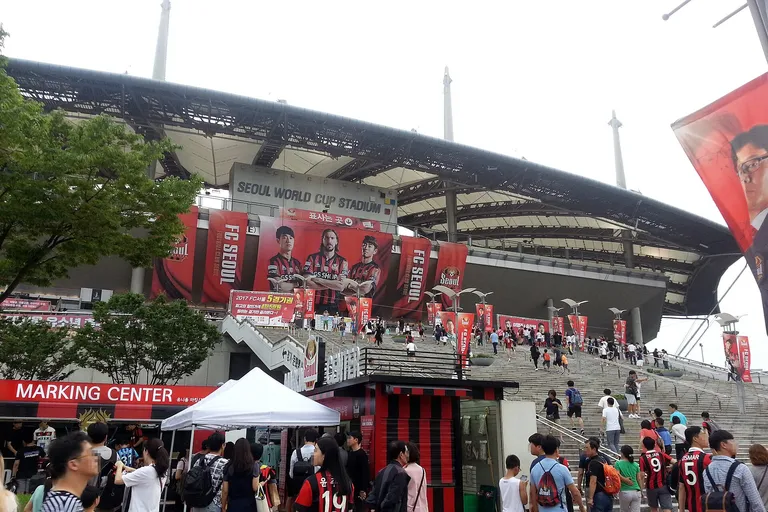
World Cup Stadium: three forms of urban reuse
Compare a stadium, converted oil tanks and a restored landfill park without underestimating the scale of the area.

From Jagalchi to BIFF Square: reading Busan’s old port city
A three-to-four-hour route from Nampo Station through a working seafood market, the waterfront, cinema history, and practical street-food ordering.