Seoul · Winter
Seoul Lantern Festival: read a winter night along Cheonggyecheon
Seoul Lantern Festival is more rewarding as a slow winter walk than as a checklist of illuminated objects. Water reflects the colours, close-up lantern shapes give way to a wider scene from a bridge, and each edition changes the conversation between the display and the city. The festival began in 2009; its setting is not fixed forever.
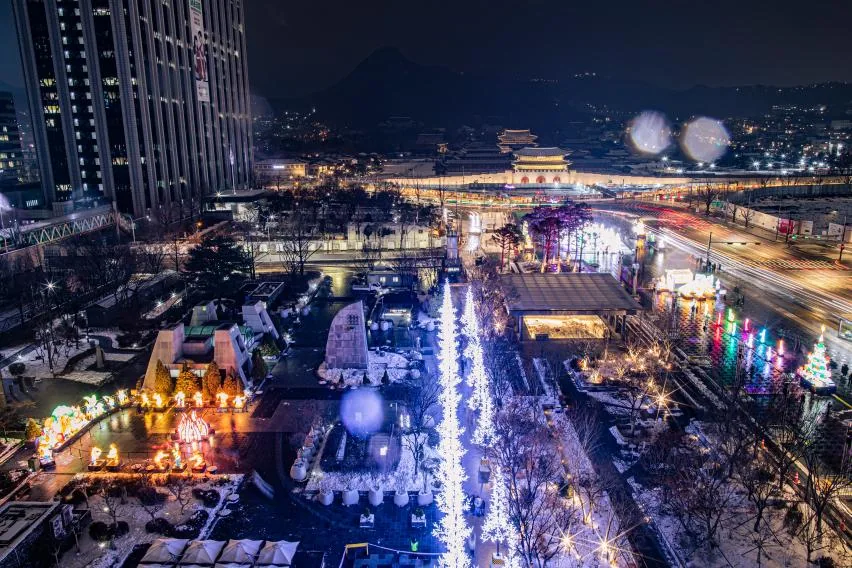
Archive view at Gwanghwamun Square; shooting year not stated. This is not the Cheonggyecheon route described in this guide.
© 서울관광재단Official source ↗KOGL-1
Confirmed edition dates · Next edition needs confirmation
The reviewed official site still presents the 2025 edition and the past winter programme extending into January 2026. This guide does not confirm late-2026 dates, display sections or lighting hours. Wait for a new announcement before booking a trip around it.
Official website ↗Look at the lantern and its reflection
From paper lanterns to moving light: how to read a night exhibition
The KTO’s 2024 programme included paper and LED lanterns, air balloons and kinetic art. Expecting only traditional lanterns misses that variety. A useful viewing exercise is to notice how the material softens the light, how colour changes, and whether movement alters the scene.
Why an old Gwanghwamun photograph is not a route map
The organiser’s archive spans editions from 2009, while the official tourism photo archive also records the festival and market at Gwanghwamun Square. An open square and a lowered stream corridor create different walks. Our photograph shows an earlier square edition, not a promise that those objects or stalls will appear along the next Cheonggyecheon display.
You do not need to add a market to make a lantern walk worthwhile. If food and gifts are the purpose instead, locate the operating market before extending the river walk. Treat the exhibition and winter market as separate choices, not an automatic package.
See a short stretch twice, in different ways
This is a walking proposal for an edition using Cheonggyecheon. Match it to the next official installation map; these landmarks do not confirm future exhibition boundaries.
01
Cheonggye Plaza → Gwangtonggyo: look closely
Compare a lantern’s outline, material and reflection. Instead of using all your photography time at the first installation, share it between two or three favourites.
청계광장 서울 ↗02
Gwangtonggyo → Gwanggyo: change your viewpoint
From an open street-level footpath, look at the stream together with the surrounding buildings. Compare the close-up display with its place in the cityscape, then finish toward Jonggak Station if you want a short outing.
광교 청계천 서울 ↗
Allow 45–75 minutes as an editorial estimate including stops, not a measured walking record. If stream access is closed, stay at street level rather than crossing barriers.
A short winter evening, from dinner to the return train
These plans draw on official announcements. Travel and visit times are suggested allowances for queues and breaks, not field measurements. The event’s current access restrictions and instructions take priority.
01 · 45–60 min
Dinner around Gwanghwamun
광화문역 서울
Eat indoors first. Rely on market stalls for dinner only after checking that the market operates during your visit.
View the place on a map ↗02 · 45–75 min
A selected section from Cheonggye Plaza
청계광장 서울
Choose start and finish from the official map. Drop any separate, distant venue such as Uicheon if time is short.
View the place on a map ↗03 · 20–40 min for street access and a break
Return toward Jonggak Station
종각역 서울
Change the finish if the current exhibition uses a different section. A shorter comfortable visit is enough.
View the place on a map ↗
Practical details before you travel
Who this trip suits
Use it as a short evening after a central Seoul meal. Installation sections and circulation can change between editions, so last year’s photograph is not proof of this year’s location. Check the lantern displays and Gwanghwamun Market separately.
Station to event entrance
Save Cheonggye Plaza and compare access from Gwanghwamun and Jonggak. The stream-level walkway and street-level pavement are different routes. If stairs are difficult, verify open ramps on the event map; otherwise plan a shorter street-level view.
Booking, costs and preparation
Admission and workshop bookings for the next edition are not confirmed here. Read the organiser’s notice to separate any free viewing from paid activities. Eat before the walk and check opening hours for a warm break afterwards.
Getting home and managing crowds
Choose the return station first and walk a short section toward it. Keep station entrances and stream stairs clear. If cold or a wet surface makes walking uncomfortable, use an open intermediate exit and end the outing.
Rain, cancellation and sold-out alternatives
In rain, snow, strong wind or on a non-lighting day, drop the stream walk and check the National Museum of Korean Contemporary History. If open, pair it with a meal around Gwanghwamun. If closed, consider an open indoor stop such as Kyobo Book Centre and leave the lantern walk for another day.
Questions before you go
Will the next edition use the same venue?
Not confirmed in this guide. Do not use past display locations as a reason to book until the new official map and dates are published.
Is the entire display accessible without stairs?
Step-free access to the entire route is not verified. Check ramps, closures and lift operation for that edition, or choose street-level sections.
Related stations and trips
Official dates and visitor information
Sources checked