Seoul · Spring / Autumn
K-Royal Culture Festival: from seeing a palace to experiencing it
At K-Royal Culture Festival, a palace is more than a backdrop of old buildings. Courtyards become stages and halls become part of an exhibition. The useful question is not how many palaces you can collect, but which palace and which experience you want to spend time with.
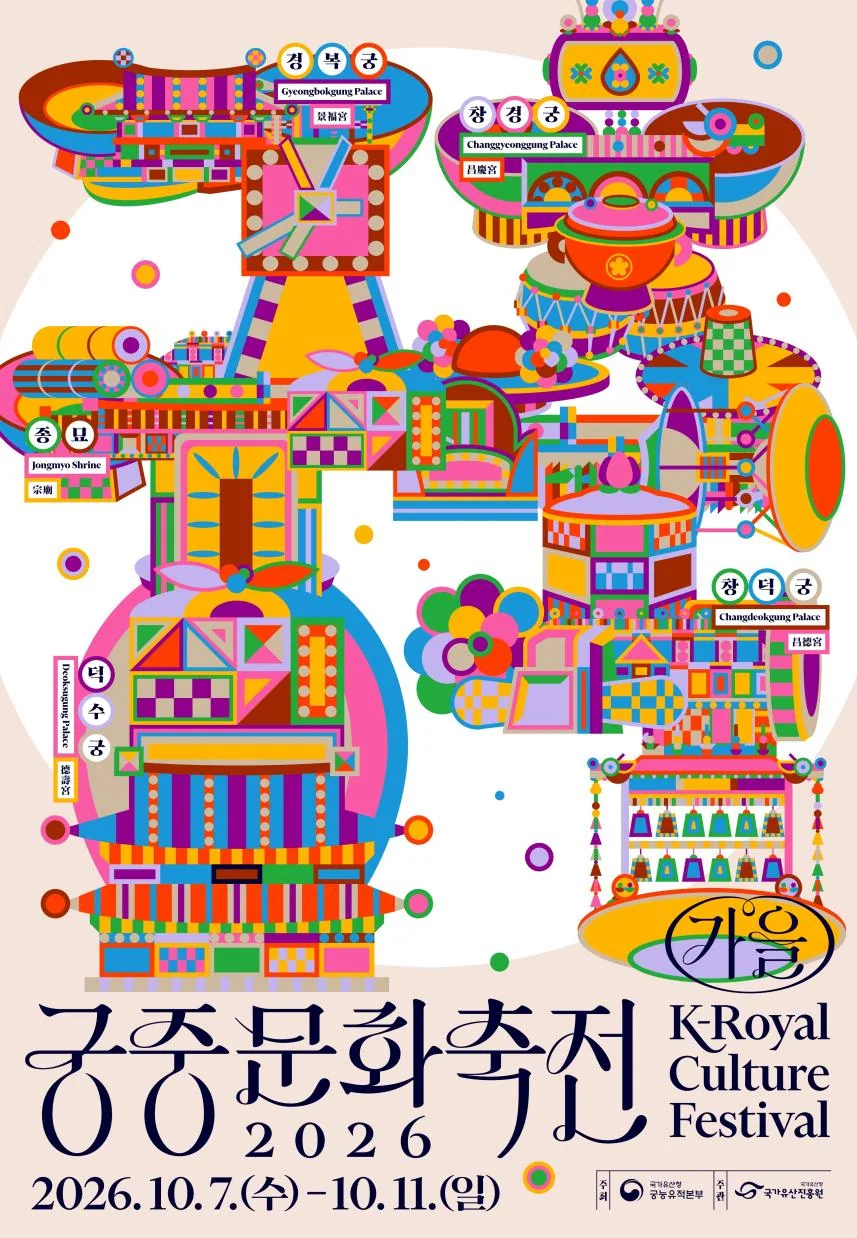
Official autumn 2026 poster for a completed edition, not an on-site photograph.
© 국가유산청 · 국가유산진흥원Official source ↗KOGL-1
Confirmed edition dates · Autumn 2026 edition
The autumn 2026 edition ran 7–11 October and has ended. The next dates, booking release and night entry require a new announcement. The plan below explains how to choose a palace.
Official website ↗Move your attention from buildings to how people use the space
A 2014 pilot and a first festival in 2015
The Korea Heritage Agency distinguishes the 2014 pilot from the first numbered festival in 2015. This is not a claim of an unbroken Joseon-era annual event. It is a modern festival connecting historic spaces with performance, exhibitions and participation, which explains why re-enactment and contemporary interpretation coexist.
Choose an experience before a palace name
These are examples from the completed autumn 2026 programme, not a booking list for the next edition.
Gyeongbokgung: clothing and procession
Gyeongbokgung Hanbok Yeonhyang grouped royal-clothing experiences including a royal walk. This kind of programme suits an interest in dress, colour and the way a procession occupies the palace.
경복궁 서울 ↗Changdeokgung: space and craft
The exhibition Joseon Spatial Aesthetics: The Order of White used Huijeongdang as its setting. Exhibition-based visits may suit someone wanting architecture and craft rather than a large performance.
창덕궁 서울 ↗Deoksugung: the Korean Empire
From Gwangmu to Yunghui considered imperial history around the centenary of Emperor Sunjong’s death. This offers a way to distinguish the Korean Empire from an undifferentiated image of an old Joseon palace.
덕수궁 서울 ↗Palace admission and individual programme reservations may be separate. After choosing, check the meeting point, language and duration.
Before the performance, ask why this courtyard
On arrival, look at the relationship between the hall and courtyard before concentrating on the stage. Compare the arrangement you can see without a performance with the space after people occupy it. A contemporary production is an interpretation of the setting, not documentary evidence of everyday royal life.
A day example if you choose Gyeongbokgung
These plans draw on official announcements. Travel and visit times are suggested allowances for queues and breaks, not field measurements. The event’s current access restrictions and instructions take priority.
01 · 30–45 min arrival and entry allowance
Check admission at Gyeongbokgung’s Gwanghwamun gate
경복궁 광화문
Separate the programme meeting point from the ordinary admission queue. Follow the booking if it specifies another gate.
View the place on a map ↗02 · 90–120 min sightseeing + programme duration
Palace courtyards and your chosen programme
경복궁 근정전
Place flexible sightseeing around the fixed programme. Drop an additional Changdeokgung visit if time is short.
View the place on a map ↗03 · 60–90 min
A Seochon meal, then Gyeongbokgung Station
경복궁역 서울
Move the meal after the programme if queues could make you late. Night sightseeing needs its own permission or entry arrangement.
View the place on a map ↗
Practical details before you travel
Who this trip suits
Choose it for architecture combined with a cultural programme. Gyeongbokgung night events and Changdeokgung garden activities use different places and entry arrangements; do not assume one festival ticket covers everything. Select one must-see programme, then build the day around its palace.
Station to event entrance
Compare Gyeongbokgung and Gwanghwamun stations for Gyeongbokgung events, and Anguk for Changdeokgung. A ticket’s meeting point may not be the main gate. The sample below uses Gyeongbokgung; replace the map and meal location if your booking is at Changdeokgung.
Booking, costs and preparation
Check programme admission and ordinary palace admission separately. Read age, language, companion and cancellation conditions, and save your confirmation offline. Without a reservation, combine ordinary palace sightseeing only with programmes explicitly open to walk-ins. Past prices are not a confirmed next-edition budget.
Getting home and managing crowds
Do not add another palace after a night programme. Stay with your group on uneven stone and dim courtyards, and do not assume suitcase storage is available inside. Arrange hotel storage and verify the lift route at your station.
Rain, cancellation and sold-out alternatives
Check whether your reserved programme runs or is cancelled in rain. If cancelled, check the National Palace Museum of Korea, shorten the outdoor palace visit and pair the museum with a meal in Seochon. Palace and museum opening arrangements are separate.
Questions before you go
Is it worth visiting without a reservation?
Yes, if ordinary palace sightseeing and confirmed walk-in programmes interest you. If one performance is your only reason to go, check availability first.
Can I join without Korean?
Performances and guided activities differ in language dependence. Verify the programme language and international booking route; English interpretation is not assumed.
Related stations and trips
Official dates and visitor information
Sources checked