Where Remembrance Meets Everyday Life at May 18 Memorial Park
Your trip at a glance
- Start
- Uncheon
- Time needed
- 3–5 hours
Uncheon Station → Memorial center → Memorial space
Contents +
A respectful 3–5-hour guide to memorial, cultural, and civic spaces from Uncheon Station.

QUICK ANSWER
The short answer
From Uncheon Station, plan a local bus, taxi, or a substantial 20–30-minute walk to May 18 Memorial Park. Begin with official interpretation, then distinguish memorial sculpture, cultural facilities, and everyday civic paths. On ceremony days, event control and the movement of bereaved families and participants take priority over a visitor’s route or camera.
- Start
- Uncheon
- Transit
- Line 1
- Recommended time
- 3–5 hours
- Route
- 5 key stops
TAKE IT WITH YOU
Turn this guide into a route you can use
Open the stops in Google Maps and keep the Korean place names ready for signs, ticket desks, and local searches.
- Start
- Uncheon
- Time needed
- 3–5 hours
- Transit
- Line 1
START & TRANSPORT
Your first leg and official transport information
Suggested exit & walk
UncheonCheck the first leg and transport in the route below.The suggested exit may not be the lift exit. With luggage or mobility needs, prioritise the accessible route.Select the station to check exit facilities and first and last trains by direction.
- 01Uncheon Station
- 02Memorial center
- 03Memorial space
- 04Civic spaces
- 05Return stop
Last check before you go
Check closures, bookings and weather. With large bags, arrange storage and a collection time before setting out.
Recheck last trains, transfers, works and lift availability.
Check the origin, interchange and destination separately. Maintenance can change the route, so ask station staff for day-of help.
Times vary by line, direction, weekday, weekend and holiday. For a late trip, verify the last possible interchange too.
The map links named places only. Add your chosen restaurant, performance or rest stop separately. Recheck last trains, works and facility outages with the official operator.
CIVIC MEMORY 01
The metro exit is not the park entrance
Choose the transfer by weather, mobility, and return time.
Official institutional directions include a local bus from Uncheon. Save the return stop first, and expect delays around commemorations and public events.

CIVIC MEMORY 02
Memorial, culture, and civic life have different roles
One park contains several institutions and rhythms.
The official center describes performance halls, exhibitions, memorial areas, youth facilities, and a temple. Observe how memory remains present without excluding everyday civic use.

CIVIC MEMORY 03
Read the official explanation before interpreting a monument
Do not compress May 18 into one heroic image.
Follow the sequence and wording provided on site. Avoid playful poses, loud video, moving flowers, or treating personal memorial traces as props.

CIVIC MEMORY 04
International visitors can connect the park to official English records
When one sign is not enough, an official timeline and archive can supply context before and after the visit.
May 18 Memorial Park is not a chronological archive of the entire uprising. First-time international visitors can read Gwangju City’s official English history before arrival, then use the English May 18 Democratic Uprising Archives site to understand the record types and exhibition structure. Save those official pages offline instead of relying on one automatically translated travel post when on-site interpretation is mainly Korean.
After the visit, write down three questions: who is speaking, what record supports the account, and how the roles of the memorial park, national cemetery, and archives differ. Resist turning an emotionally powerful visit immediately into a slogan or definitive social-media summary. Leaving part of the history unresolved is more honest than claiming that one park explained everything.

CIVIC MEMORY 05
Ceremony days have a different timetable
The event belongs first to mourners and participants.
Accept temporary access controls. Do not photograph bereaved families, demand interviews, or use a ceremony as background content without consent and proper coordination.

CIVIC MEMORY 06
Return to civic paths with a present-day question
Memory continues through education, art, and public life.
If the visit is emotionally heavy, rest rather than adding attractions. Record verified sources and questions, and check provocative claims before sharing them.

REALISTIC ITINERARY
- 00:00Uncheon Station
Choose bus, taxi, or walk.
- 00:35Memorial center
Check events and official context.
- 01:10Memorial space
Move quietly and read first.
- 02:20Civic spaces
Observe coexistence with daily life.
- 03:20Return stop
Rest and leave with time.
FOR INTERNATIONAL TRAVELERS
- Give ceremonies and mourners priority.
- Do not touch personal memorial items.
- Do not photograph or interview participants without consent.
- Shorten the visit when emotionally necessary.
- Save Gwangju City and the May 18 Archives official English pages before arrival.
FAQ
Can I walk from Uncheon Station?
Yes, but it is substantial; a local bus or taxi may be better in heat, rain, or limited mobility.
Is this the National May 18 Democratic Cemetery?
No. The memorial park is in Seo-gu; the national cemetery is in Buk-gu.
Can I visit during an event?
Access may change. Follow official notices and on-site control.
How can I understand the history if I do not read Korean?
Save Gwangju City’s official English May 18 history and the English May 18 Archives site before visiting. The park and archive serve different roles, so avoid treating either location alone as the complete history.
Check official information (4)
Information checked 2026.09.07
Hours, prices and closures can change. Check the official notice before visiting.
A research-based guide, not a first-hand trip report.
CONTINUE EXPLORING
Continue at the next station
Three next trips selected by comparing city, travel themes, and available time—without simply repeating the same neighborhood.

Read Relationships Before Buildings in Yangnim-dong
A 3–5-hour modern-architecture walk through education, medicine, housing, public access, and resident privacy.
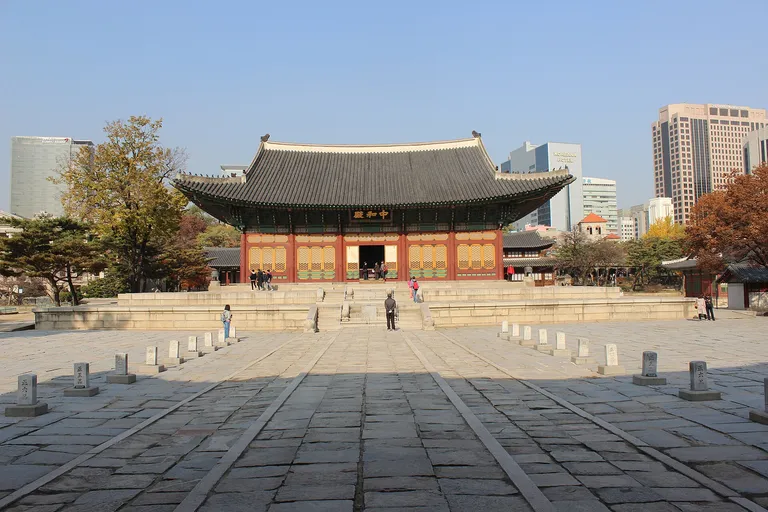
City Hall: three eras within one Seoul block
Connect late-royal Deoksugung, modern Jeongdong and today’s civic square while checking closures and public events.

See the City Through Gwangju Cinema’s One Screen
Experience a working single-screen cinema through one film, its building, audience rights, and Chungjang-ro.