Is Songdo a future city? Reading planning and ecology in Central Park
Your trip at a glance
- Start
- Central Park Station
- Time needed
- 3–5 hours around sunset
Central Park Station Exit 4 → Tri-Bowl and eastern park → Selected canal section
Contents +
A three-to-five-hour guide linking the seawater canal, Tri-Bowl, the IFEZ observatory, reclaimed land, and the edges of designed nature.

QUICK ANSWER
The short answer
Begin at Central Park Station Exit 4, orient yourself at the tourism center and Tri-Bowl, walk one side of the 1.8-kilometer seawater canal, then—on an operating day—use the free 33rd-floor IFEZ PR Center to compare the plan from above before finishing at dusk. Allow three to five hours. The park is free and water activities cost extra. The PR Center closes on Mondays and specified national or major holidays, but may use shorter hours on ordinary public holidays, so check your exact date.
- Start
- Central Park Station Exit 4
- Recommended time
- 3–5 hours around sunset
- Official scale
- About 370,000㎡ · canal 1.8 km
- Free core
- Park walk and IFEZ PR Center
- PR Center hours
- Tue–Fri 10:00–21:00 · weekends/ordinary holidays 13:00–21:00
- Access
- Many level paths · check each facility
TAKE IT WITH YOU
Turn this guide into a route you can use
Open the stops in Google Maps and keep the Korean place names ready for signs, ticket desks, and local searches.
- Start
- Central Park Station Exit 4
- Time needed
- 3–5 hours around sunset
- Access
- Many level paths · check each facility
START & TRANSPORT
Your first leg and official transport information
Suggested exit & walk
Central Park Station Exit 4Many level paths · check each facilityThe suggested exit may not be the lift exit. With luggage or mobility needs, prioritise the accessible route.Luggage storage
Station locker listedThe official Incheon Transit page lists a luggage locker. Confirm live availability and size at the station.The official page lists lift routes by exit, lockers and direction-specific timetables.
Last check before you go
Check closures, bookings and weather. With large bags, arrange storage and a collection time before setting out.
Recheck last trains, transfers, works and lift availability.
Check the origin, interchange and destination separately. Maintenance can change the route, so ask station staff for day-of help.
Times vary by line, direction, weekday, weekend and holiday. For a late trip, verify the last possible interchange too.
The map links named places only. Add your chosen restaurant, performance or rest stop separately. Recheck last trains, works and facility outages with the official operator.
PLANNING QUESTION 01
To understand Songdo, imagine the tidal flat below the towers
Central Park is not decoration on empty land; it is the organizing landscape of a reclaimed international district.
Official Incheon information describes Songdo Central Park as Korea’s first park to draw in seawater, with roughly 370,000 square meters of green space and a 1.8-kilometer canal. The landscape also results from large-scale reclamation. Treating the previous shoreline and mudflat as the starting point makes the park’s artificial quality historically meaningful rather than simply “fake.”
If you photograph only the skyline, Songdo can resemble many global business districts. Instead, ask where the canal water comes from, how paths connect offices and homes, and whether shade, wind, and block size support everyday walking. The useful question is not whether Songdo looks futuristic, but what kind of future its plan selected.

PLANNING QUESTION 02
Choose an eastern or western canal experience instead of walking both banks
The park is large enough that a clear endpoint matters more than a full circuit.
Official information lists a walking garden, grass garden, terrace garden, and other themed spaces along the canal. Decide whether your priority is the cultural buildings near the station and G-Tower, or the broader western water edge and sunset. Walking both sides creates repetition and can consume the energy needed to understand the rest of the district.
Boats and canoes offer a different viewpoint, but prices, hours, weather, and seasonal operations vary. Complete a free walking plan first and add a ride only if it is operating. Many entrances are step-free, but docks and individual buildings require separate accessibility checks.

PLANNING QUESTION 03
On the 33rd floor, look for planning lines rather than landmarks
Height reveals the reclaimed grid and the park’s structural role.
The free IFEZ PR Center in G-Tower leads through displays about mudflats, the free economic zone, and smart-city development to a 360-degree observatory. It is an official promotional space, so read its achievement-focused narrative critically and compare it with what you experienced at ground level.
Find the canal, business blocks, housing, Incheon Bridge, the West Sea, and areas still being built. Road width, block scale, and green corridors explain more than building names. As verified in September 2026, the center opens Tue–Fri 10:00–21:00 and weekends or ordinary public holidays 13:00–21:00. It closes Mondays, January 1, the Lunar New Year and Chuseok periods, and specified national holidays. Last entry is 20:30 and visits end at 20:50. Maintenance or official events can restrict entry.

PLANNING QUESTION 04
Tri-Bowl tests whether a planned city can create public culture
Its inverted forms matter, but so does the way the space is actually used.
Tri-Bowl’s curved volumes and reflecting pool create Songdo’s most recognizable cultural image. Look beyond the silhouette to the route from the station, the public space beneath and around the building, and the relationship to performances and exhibitions. A cultural building helps form civic life only when people can approach and use it.
Interior access depends on the program. Treat an exterior visit as the default and verify reservations, age limits, language, and opening before planning a show. At night, avoid backing toward water for photographs or placing a tripod across the path.

PLANNING QUESTION 05
Designed nature can become ecology, but it should still be questioned
Look at water, birds, shade, maintenance, and the less polished edges together.
Calling the park artificial does not erase its ecological value, and calling it green does not automatically make the district sustainable. Observe seawater circulation, planted trees, wet areas, bird activity, and hard paving. Season changes shade, smell, wind, and wildlife use.
Construction, wide roads, and strong building-channel winds at the park edge are also part of Songdo. Comparing the signature center with the margins shows what the plan chose to display. Do not feed wildlife, enter protected planting, or ignore pet and wetland rules.

PLANNING QUESTION 06
Design the visit around wind, heat, and sunset
Waterfront exposure and observatory hours shape the day more than distance alone.
Songdo’s proximity to the sea and broad street grid can produce strong wind and sharp seasonal differences. Avoid exposed midday sections in summer and shorten waterfront night time in winter. In rain, prioritize the tourism center, IFEZ PR Center, and any confirmed indoor exhibition.
A practical order is canal reflections before sunset, the elevated overview if operating, then a short night walk near the station. Fix the observatory’s last-entry time and your final train before adding a boat queue.
PLANNING QUESTION 07
A short-looking Songdo block grows when wind and return are included
Use one canal segment, one indoor stop, and the metro return as the base unit.
Distances between Songdo’s broad roads and large buildings feel longer than the map scale, while waterfront wind and limited shade add time. Do not combine the entire park with every observatory and venue; fix one canal side, one confirmed indoor stop, and the metro return first. After dark, choose the clearly lit crossing route over the shortest waterside line and save the station name in Korean offline.

REALISTIC ITINERARY
A Songdo half-day between water level and the 33rd floor
On Mondays and official closure dates, remove the observatory and spend more time around the park and Tri-Bowl.
- 01 · 00:00Central Park Station Exit 4
Check current park programs and cultural events at the tourism center.
- 02 · 00:20Tri-Bowl and eastern park
Read how station, culture, and canal meet.
- 03 · 01:10Selected canal section
Walk one side with a clear garden or sunset endpoint.
- 04 · 02:30IFEZ PR Center
On an operating day, locate the ground route within the reclaimed grid.
- 05 · 03:40Waterfront near the station
Finish with a short night view according to wind and train time.
FOR INTERNATIONAL TRAVELERS
Check observatory operations and waterfront weather together
- The IFEZ PR Center may open 13:00–21:00 on ordinary public holidays, but closes Mondays, January 1, the Lunar New Year and Chuseok periods, and specified national holidays. Last entry is 20:30.
- Individual public viewing is listed as free. General groups should book at least one day ahead; travel agencies and educational institutions have an additional official-document process. If the Korean booking flow is a barrier, ask the 1330 Travel Helpline to confirm the current procedure.
- Boat prices and operating hours vary by season and weather; verify them on the day.
- Carry a light wind layer even in summer and stronger wind protection in winter.
- Level park routes do not guarantee that every dock or building is accessible; check separately.
FAQ
Songdo Central Park, boats, and the IFEZ observatory
How far is Songdo Central Park from Central Park Station?
The nearest park edge is about two to five minutes away; Exit 4 is convenient for the tourism center and Tri-Bowl.
Is Songdo Central Park free?
Walking in the park is free. Boats, canoes, and selected performances or activities cost extra.
Is the G-Tower observatory free?
Yes. General groups should book at least one day ahead, while travel agencies and educational institutions have an additional official-document process. Entry may also be restricted for maintenance or official events.
What are the IFEZ PR Center hours?
As verified in September 2026: Tue–Fri 10:00–21:00 and weekends or ordinary public holidays 13:00–21:00. It closes Mondays, January 1, the Lunar New Year and Chuseok periods, and specified national holidays. Last entry is 20:30; recheck your date.
How long should I walk in Central Park?
Allow 70–100 minutes for one canal side and selected gardens rather than trying to cover both banks.
Is Songdo good on a rainy day?
Yes with a shorter outdoor section and confirmed indoor stops. Avoid waterfront activities in heavy rain or strong wind.
Check official information (3)
Information checked 2026.09.08
Hours, prices and closures can change. Check the official notice before visiting.
A research-based guide, not a first-hand trip report.
CONTINUE EXPLORING
Continue at the next station
Three next trips selected by comparing city, travel themes, and available time—without simply repeating the same neighborhood.

Beyond Chinatown: reading Incheon as an open-port city from the last station
A four-to-six-hour route through railway history, migrant food, unequal settlements, the port ridge, and warehouses reused for culture.
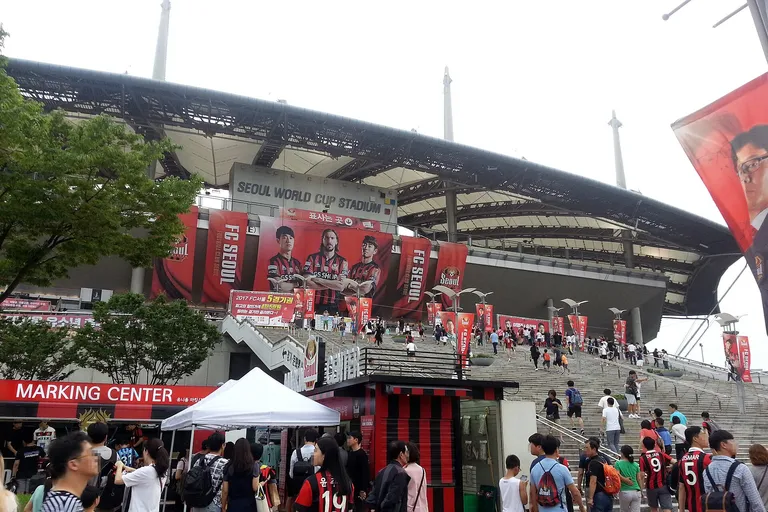
World Cup Stadium: three forms of urban reuse
Compare a stadium, converted oil tanks and a restored landfill park without underestimating the scale of the area.

Why is Ilsan Lake Park so large? Reading new-town nature from Jeongbalsan
A three-to-five-hour guide through Ilsan’s civic axis, artificial-lake ecology, 9.1-kilometer path network, seasons, and an easy return.