SEOUL & METRO · 32 STATION ROUTES

Choose one stop across Seoul & Metro

Palaces, markets, performance, parks, and night views extend to Incheon’s port history, Suwon Hwaseong, Songdo, and Ilsan. Start with one station that fits your time and question.

32 stations · 8 lenses · Korean, English, and Japanese

Choose your base and cities before your day plans

MATCHED STATIONS

Seoul and metro journeys that fit

10 journeys · Page 1/2

From Seoul Forest to Seongsu: walking through a neighborhood that keeps makingSuin–Bundang Line · Seoul Forest Station
SeoulParks & watersideCity & architecture

From Seoul Forest to Seongsu: walking through a neighborhood that keeps making

A four-to-six-hour guide connecting urban ecology, changing land use, handmade-shoe history, red-brick factories, and the temporary pop-up economy.

Est. one way from Seoul Station
About 25–35 min from Seoul Station
Choose it for
Connecting an urban forest with Seongsu’s maker history
Check first
Facility hours, pop-up queues, and shared paths
Read the in-depth guide
Jamsil is deeper than its lake and tower: walking above a vanished islandSubway Lines 2 & 8 · Jamsil Station
SeoulParks & watersideNight views

Jamsil is deeper than its lake and tower: walking above a vanished island

A three-to-five-hour route through Seokchon Lake, the Samjeondo Monument, Jamsil’s transformed waterways, and two very different night views.

Est. one way from Seoul Station
About 40–50 min from Seoul Station
Choose it for
Reading a lost island through Seokchon Lake and its skyline
Check first
Festival crowds, lake detours, and observatory cost
Read the in-depth guide
Is Songdo a future city? Reading planning and ecology in Central ParkIncheon Subway Line 1 · Central Park Station
IncheonMetro day tripsParks & watersideCity & architecture

Is Songdo a future city? Reading planning and ecology in Central Park

A three-to-five-hour guide linking the seawater canal, Tri-Bowl, the IFEZ observatory, reclaimed land, and the edges of designed nature.

Est. one way from Seoul Station
About 90–110 min from Seoul Station
Choose it for
Comparing a planned city from canal level and an observatory
Check first
Strong wind, observatory closures, and long park distances
Read the in-depth guide
Why is Ilsan Lake Park so large? Reading new-town nature from JeongbalsanSubway Line 3 · Jeongbalsan Station
GoyangMetro day tripsParks & watersideCity & architecture

Why is Ilsan Lake Park so large? Reading new-town nature from Jeongbalsan

A three-to-five-hour guide through Ilsan’s civic axis, artificial-lake ecology, 9.1-kilometer path network, seasons, and an easy return.

Est. one way from Seoul Station
About 45–60 min from Seoul Station
Choose it for
Seeing how a new-town axis meets a constructed lake ecology
Check first
Park scale, event controls, and the return after sunset
Read the in-depth guide
Olympic Park: an east-side walk without a full circuitLines 5 & 9 · Olympic Park Station
SeoulParks & watersidePalaces & heritage

Olympic Park: an east-side walk without a full circuit

Start on the east side and set a turnaround time instead of circling the entire park. Adding Mongchontoseong’s slopes and the western World Peace Gate substantially increases walking. Event days can change crowd levels and access routes.

Choose it for
Park · Walking
Check first
For an indoor substitute, check the museum’s opening day and its separate approach; do not assume direct station access.
Read the in-depth guide
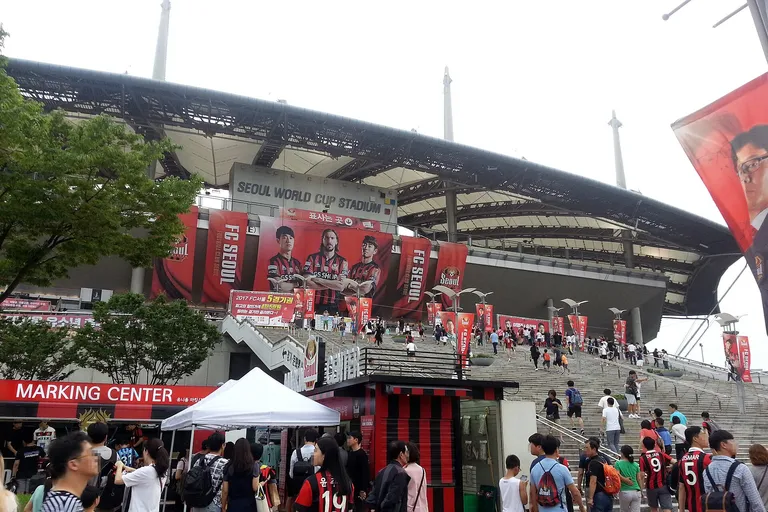
World Cup Stadium: three forms of urban reuseLine 6 · World Cup Stadium Station
SeoulCity & architectureParks & waterside

World Cup Stadium: three forms of urban reuse

Compare a stadium, converted oil tanks and a restored landfill park without underestimating the scale of the area.

Choose it for
Urban reuse · Ecology · Architecture
Check first
Oil Tank Culture Park does not offer routine interior access. Verify a dated program and booking before counting on entry; it is not a guaranteed rain shelter. Reduce outdoor walking in extreme weather.
Read the in-depth guide

AT A GLANCE

Compare all 32 stations

For trips beyond Seoul, count the round trip and last train first.

Times are generous ranges for a typical weekday daytime transit route. Transfers, crowding, and service work vary, so recheck a live map and the operator notice before departure.

Official Seoul route mapKORAIL metro timetables and mapIncheon Transit route map
Seoul Forest Station

Suin–Bundang Line

About 25–35 min from Seoul Station

2–4 hours
Parks & watersideCity & architecture

Connecting an urban forest with Seongsu’s maker history

Jamsil Station

Subway Lines 2 & 8

About 40–50 min from Seoul Station

3–5 hours
Parks & watersideNight views

Reading a lost island through Seokchon Lake and its skyline

Central Park Station

Incheon Subway Line 1

About 90–110 min from Seoul Station

3–5 hours
Metro day tripsParks & watersideCity & architecture

Comparing a planned city from canal level and an observatory

Jeongbalsan Station

Subway Line 3

About 45–60 min from Seoul Station

3–5 hours
Metro day tripsParks & watersideCity & architecture

Seeing how a new-town axis meets a constructed lake ecology

TWO-STOP IDEAS

Two stops that create a useful contrast

Connect two distinct urban stories instead of collecting nearby sights.

01

Gyeongbokgung → Samseong

A royal axis and contemporary Gangnam

Read palace order and Seochon in the morning, then compare COEX and Bongeunsa in modern Gangnam.

02

Jongno 5-ga → Dongdaemun History & Culture Park

A working market and design after dark

See Gwangjang as a working market before following the stream toward DDP’s layered history and evening architecture.

03

Incheon / Suwon / Jeongbalsan

Choose only one city beyond Seoul

Do not combine them. Give one full day to port history, a fortress city, or a planned lake district.

FAQ

Frequently asked questions

How many days do I need for all 32 stations?

Even within Seoul, one or two stations per day is enough. Treat Incheon, Suwon, and Goyang as separate day trips.

Can I reach the wider metro trips only by subway?

Incheon, Central Park, and Jeongbalsan have direct rail access. Suwon Hwaseong requires a local bus after Suwon Station.

Which station is best for a first Seoul visit?

Choose Gyeongbokgung for heritage, Myeongdong for arrival-day basics, or Ichon and Samseong for weather-resistant indoor time.